
RB Services carries out PAT testing in Coventry for offices, shops, schools, workshops, industrial units and managed premises. Our City & Guilds qualified engineers inspect and test each portable appliance on site, fit a pass or fail label, and give you a report listing every item tested.
We plan the visit around how your site works, so staff can carry on with their day while testing moves from room to room.
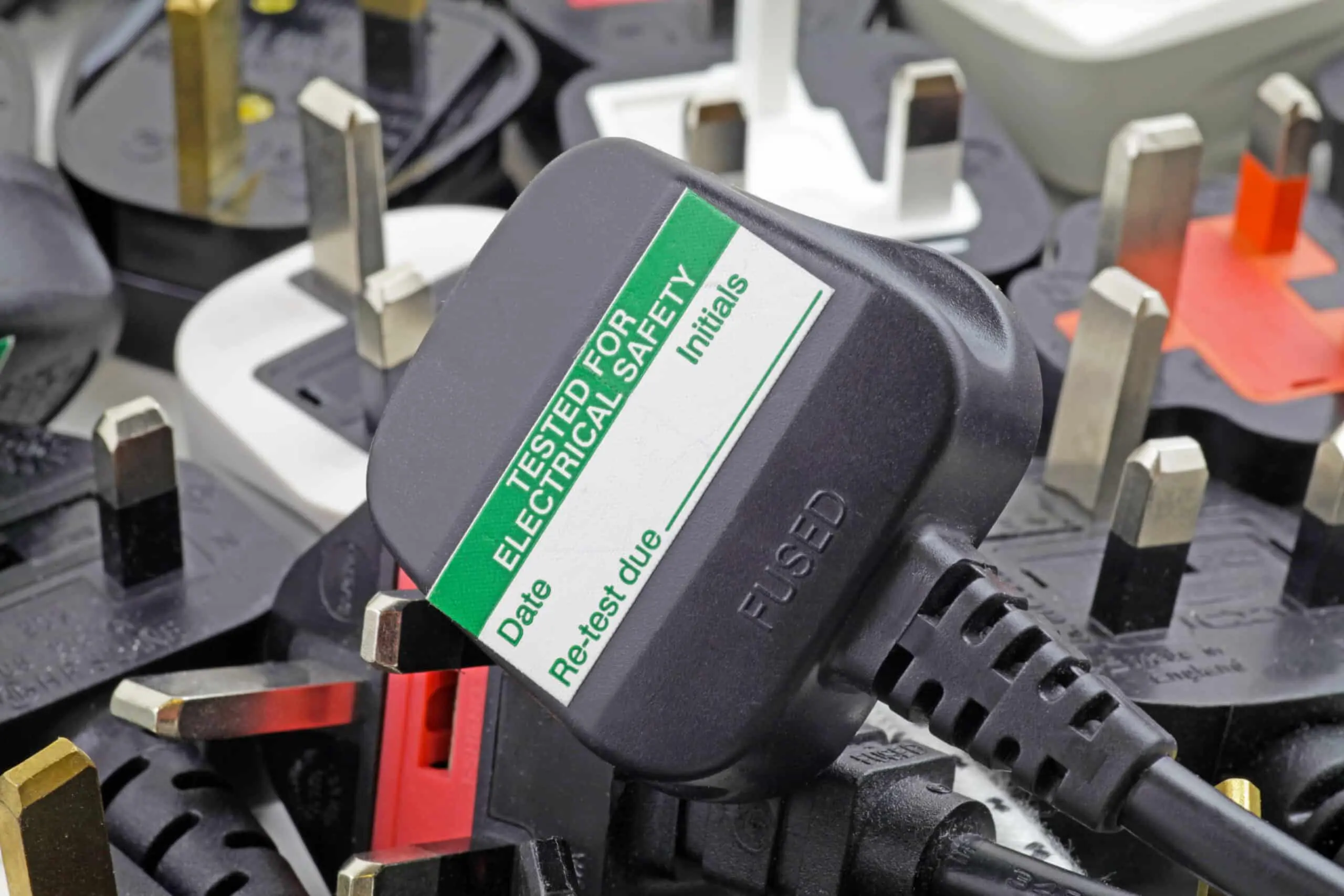
PAT testing is a check that portable electrical equipment is still safe to use. It starts with a close look at the appliance, its plug and its cable, then moves on to electrical tests using a calibrated tester.
No law sets out exactly how often equipment must be tested. The Electricity at Work Regulations 1989 require employers to maintain electrical equipment so it does not cause danger, and the IET Code of Practice for In-service Inspection and Testing of Electrical Equipment explains how testing should be carried out. We follow that Code on every visit.
Our engineer works through your site one item at a time.
Every appliance gets a visual inspection of its casing, plug, fuse and cable. Where the class of appliance calls for it, we then test earth continuity and insulation resistance, and we check the polarity of extension leads and detachable power leads.
Each item is labelled with its result. Your report lists each appliance by its ID, along with the test results and whether it passed or failed, giving you one record for the whole site.
Equipment that is moved, unplugged and shared every day picks up wear that is easy to miss. A frayed lead, a cracked plug or a loose connection can lead to an electric shock or a fire. Regular inspection and testing finds these faults so the item can be repaired or taken out of use before anyone is hurt.
We test equipment in commercial offices, industrial units, retail premises, schools and colleges, healthcare settings and managed buildings across Coventry. Whether you have a few dozen items in a small office or several hundred across a larger site, the visit is planned around your item count and opening hours.
Use our quick quote form and we’ll come back to you with a clear price based on your item count, site type and preferred times.
Any electrical item that plugs into a socket and can be moved is usually included. In a typical Coventry workplace that means computers and monitors, printers, kettles, microwaves, fridges, heaters, power tools and extension leads.
Appliances fall into classes based on how they protect you from an electric shock. Class I appliances, such as kettles and toasters, rely on an earth connection and receive the full set of tests. Class II appliances are double insulated, carry a double square symbol and do not need an earth test. The tests are matched to each class.
Each appliance only needs to be switched off for the few minutes it takes to inspect and test it, so most teams can keep working while we go round. We can agree an order for testing so that tills, shared equipment and busy areas are covered at quieter times.
If some equipment cannot be switched off during the day, such as kitchen equipment during service, tell us when you book and we will plan around it, including outside normal hours where needed.
Tell us roughly how many items you have, what kind of premises it is and when suits you, and we will send you a price before any testing is booked.
We test across Coventry and nearby areas, including Binley, Tile Hill and Canley.
Annual checks on every extinguisher on your site, carried out to BS 5306-3, so you know each one is in place, charged and ready to use.
Routine testing of your emergency lighting to confirm each fitting comes on when the mains supply fails and lights your escape routes for the required time.
An inspection of the fixed wiring in your building, from the consumer unit to sockets and lighting circuits, with a report on its condition and any remedial work needed.
New equipment should be supplied in a safe condition, so HSE does not expect it to be formally tested before first use. A quick visual check for damage is still sensible, and the item can then be included in your next round of testing.
You can, as long as the person doing it is competent. HSE guidance says a trained member of staff can carry out user checks and visual inspections in lower-risk workplaces, but the electrical tests need suitable test equipment and the knowledge to interpret the results. Many businesses use a qualified engineer so the testing and records are done in one visit.
Yes. Most testing happens while your team is at work, because each item is only unplugged for a few minutes. If you would prefer testing outside normal hours, let us know when you book.
The item is labelled as failed and listed in your report with the reason. Our engineer will tell you whether a simple repair, such as a new plug or fuse, is likely to fix it, or whether it should be taken out of use.
Yes. You receive a report listing every appliance tested, with its ID, test results and pass or fail outcome. Keep it with your health and safety records, as it shows when each item was last checked.
Call us on 0121 268 3144, use the quote form on this page or contact RB Services online. Tell us how many items you have and where your premises are, and we will confirm a price and a date.